
Lager
Lager is one of the two main styles of beer (the other being ale). Lagers are brewed using a cool fermentation method. At Tröegs, we brew a wide range of lagers, from lighter beers like Sunshine Pilsner to amber lagers like Oktoberfest to strong, dark lagers such as Troegenator. The term “lager” comes from the German word for “storage”, since the beer was stored prior to drinking. Lagers typically take longer to ferment than ales because lager yeast works slower at cooler temperatures.
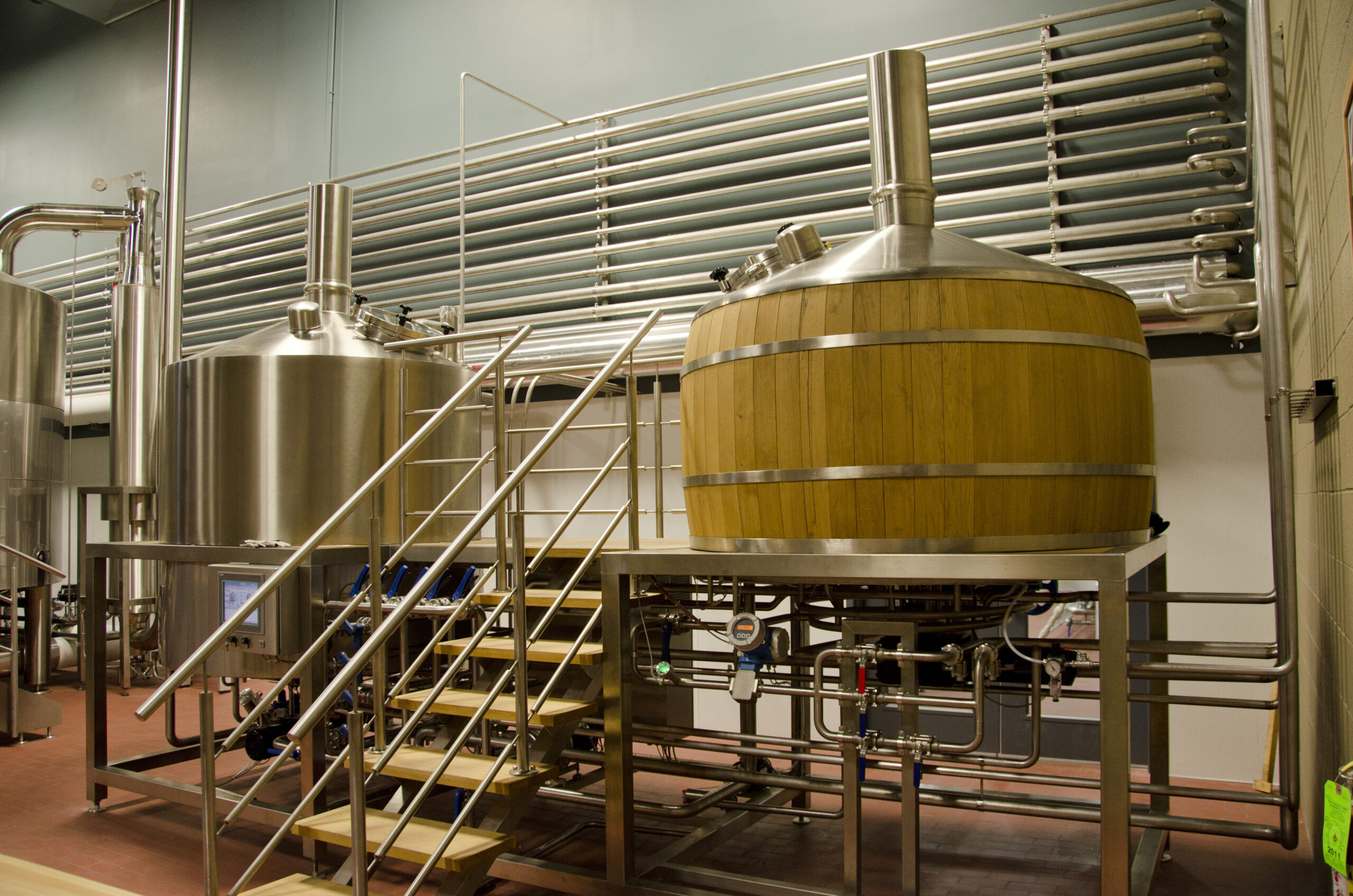
Lauter Tun: During this process, the mash is pumped over from the Mash Kettle to the Lauter Tun. This tank acts like a giant colander. As the liquid filters through the grain bed and falls through the tank’s false bottom, it extracts the sugar from the grain and clarifies the liquid, which is now called “wort”. Wort is essentially beer that hasn’t fermented yet. This process takes approximately 4 hours.
FUN FACT: Both our Mash Kettle and Lauter Tun were designed specifically to accommodate one of our most popular beers – Troegenator. Each of these tanks was built to accommodate the huge amount of malt it takes to make one batch of ‘Nator, which is 9,700 pounds!
Mad Elf
In the fall of 2002 — back when our founding brothers Chris and John were busy brewing, cleaning, bartending, giving tours on weekends, and making sales calls all over central Pennsylvania – they hatched a plan to have a little fun. They wanted to brew a big, bold Belgian-style holiday ale made with cherries and honey. Over the years, Mad Elf has gained a massive cult following fans who flock to stores – and the brewery – to get their annual Elf fix. Today, it’s one of our most popular, sought-after beers, and it certainly helped put our little brewery on the craft beer map.

Malt / Grain
Grain is a raw ingredient used in the brewing process that eventually becomes malted barley. At Tröegs, we spend a huge amount of time, energy, and money sourcing and evaluating our ingredients. We source most of our malted barley from the Midwest United States. Once the grain is processed to malted barley, we receive truckloads of bulk grain or bagged malt at the brewery. For a few of our beers like Troegenator, we source malt from Germany that’s packed in bags and shipped in containers. One of the stops on our award-winning brewery tour is our Mill Room, where we prepare every ounce of malted barley for use in our many beers. During the tour, you’ll even get to taste three of our most widely used varieties of malted barley.

Mash Tun: Milled grain is mixed with hot water into “mash”. It basically looks like a big bowl of oatmeal with too much water. The mash process takes anywhere from 45 minutes to 2 hours, depending on the beer. The heating process activates the enzymes in the grain to convert the starches into fermentable sugar.
FUN FACT: We recycle our spent grain, sending it to local farmers for use as cattle feed.
Once-a-Year
Our Once-a-Year Series includes highly sought-after fan favorites like Mad Elf, Nugget Nectar, and Nimble Giant. Unlike our Year-Round offerings, these beers are available for a very limited time each year, so it’s always best to grab them when you see them!
Open-top Fermentation
Open-top fermentation is a traditional German technique of resting freshly fermenting beer in a flotation tank, which allows proteins and inactive yeast to settle out.
When we moved from Harrisburg to Hershey, we installed two open-top fermentation tanks specifically designed to ferment DreamWeaver Wheat. With these tanks, we’re creating the optimum environment for hefeweizen yeast with subtle adjustments to temperature. During the open fermentation, we skim off any remaining proteins that bubble to the top.
It’s this crucial step that helps us achieve the soft, delicate notes of banana, clove, and subtle black pepper – all hallmarks of DreamWeaver’s flavor profile. Although it’s a little time-consuming and requires some extra work, this this additional process ultimately produces a better beer!
RTD / Scratch Cocktails
RTD stands for “Read to Drink”. Our line of Scratch Cocktails is an exploration of blending high-quality spirits with the right ingredients and flavors for ready-to-drink fun in a can. These beverages are available exclusively in our General Store at the brewery.

Scratch Beer Series
The Scratch Series is our small-batch experimental beer series that started in 2007 as a way to celebrate the brewery’s tenth anniversary. When we moved to Hershey in 2011, we installed a 15bbl pilot brewhouse to grow this series. With the addition of our Scratch Lab 3bbl R&D brewhouse in 2020, we’re able to get even more granular. To date, we’ve produced more than 500 different Scratch beers, and many have gone on to become seasonal and even year-round favorites.
Scratch Lab / R&D
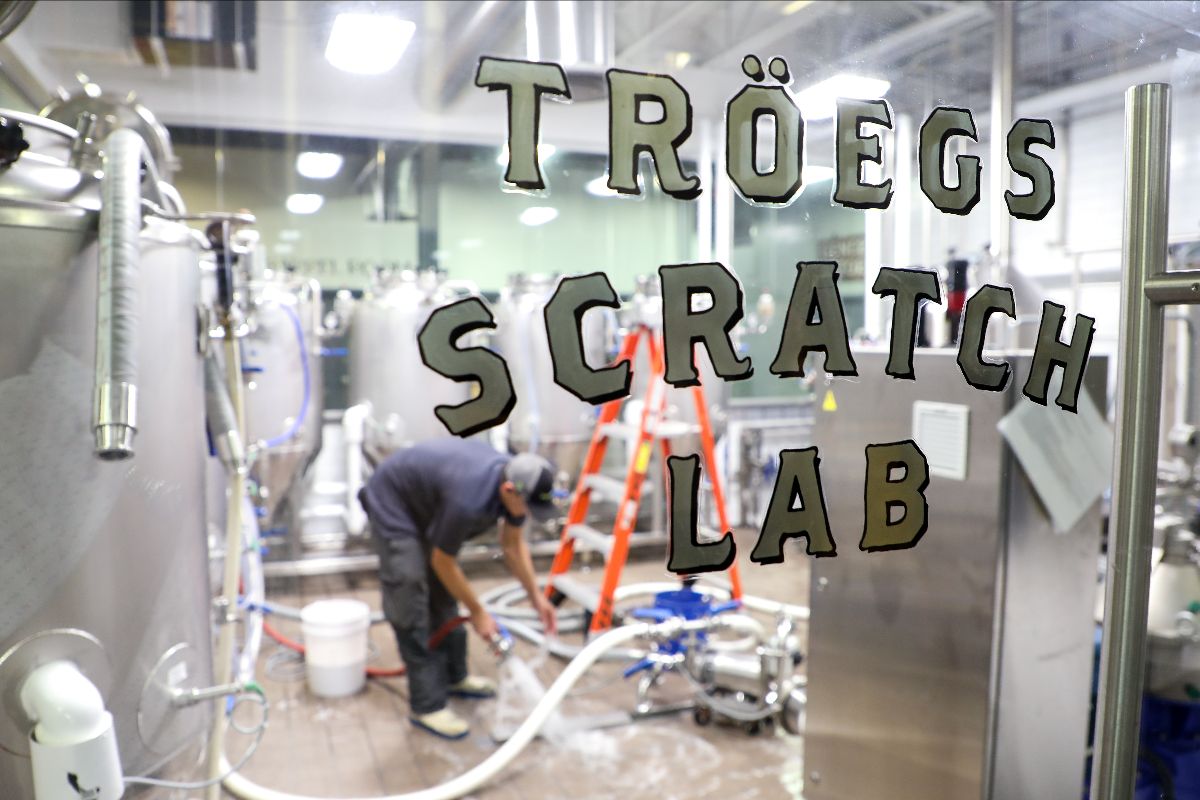
In 2020, we commissioned and installed our Scratch Lab, a 3-barrel nano-brewery designed by BrauKon to replicate the temperature controls, pressure, and geometry of our 100-barrel production brewhouse. With the Scratch Lab, we can break up 15-barrel brews into nano batches, which allows us to test things like dry-hop combinations and yeast strains side-by-side. Look for regular Brewers’ Choice releases in the Tasting Room, all of which come from our Scratch Lab!
Scratch Kitchen / Snack Bar
Our Scratch Kitchen is where we prepare all of the delicious dishes found on our Snack Bar menu. Focusing on the farm-to-table philosophy, our menu items and availability are subject to change daily. Dishes will continue to evolve based on seasonality and what our local farmers and purveyors have available at any given time.
Seasonal beer
Our seasonal beer series features four rotating IPAs: Daylight Chaser Dark IPA, Field Study Summer IPA, Leaf Seeker West Coast-style IPA, and Blizzard of Hops Winter IPA. Each beer reflects the spirit of its respective season and is only available for about three months. Our Perpetual Exploration variety packs coincide with these beers, adding to the seasonal flair of our varied beer portfolio.
Splinter Cellar
The Splinter Cellar is our wood-aging dream space. At the focal point of the expansive room are three wooden fermenters called “foeders”, each standing more than 23 feet tall. We’ve been aging beers in oak barrels for almost as long as we’ve been brewing Scratch beers. The Splinter Cellar is also where our Guided Brewery Tour kicks off.

Tasting Panel
Everyone’s favorite comment when we talk about careers at Tröegs is asking to be an “official taste tester.” Well, guess what?! We have those! Co-workers from a number of departments, including our Quality Lab and brewing teams, go through a series of classes and testing learning about off-flavors in beer. Passing a certain threshold earns your spot on the Tasting Panel. They taste everything from new grain, our brewing water, wort before fermentation, and beer before packaging. These checks and balances ensure you get the cleanest Tröegs possible.
Tröegs
Tröegs is a family nickname, from our founders’ surname Trogner. When combined with the Flemish word “Kroeg,” meaning “pub,” we get Tröegs.
Tröegs Bros
John and Chris Trogner are our co-founding brothers here at Tröegs, and they are still an integral part of our day-to-day business at the brewery. In a nutshell, John oversees the brewing side of the brewery, while Chris handles the business end.
Whole leaf hops
While most of the hops we use are pelletized, we still love stuffing our HopBack vessel to the gills with whole flower hops. Several of our beers – like Nugget Nectar, for example – benefit from a healthy dose of whole flower hops, which impart a pungent aroma to our hoppy beers.

Yeast
The scientists in our lab here at Tröegs maintain about 50 strains of yeast. Long-term storage – or banking – happens on something called a “slant”. Our house ale and lager strains see the most action. “With variety comes security,” says brewmaster John Trogner. “Since we always have our most commonly used strains in-house, we can easily go back to them for another propagation.”
